
Senate leadership is continuing discussions on the pending fiscal year (FY) 2026 appropriations vehicle as Majority Leader John Thune (R-SD) aims to pass as many as possible in this first tranche. As of now, the Senate Appropriations Committee has passed six bills out of committee — Agriculture-FDA, Commerce-Justice-Science (CJS), Interior-Environment, Legislative Branch, Military Construction-VA (MilCon-VA), and Transportation-HUD. However, it’s possible that only the MilCon-VA bill moves through the Senate as leadership works through outstanding disagreements over the topline spending figures for the next fiscal year, as well as policy issues tied to specific appropriations bills. Meanwhile, the Senate Appropriations Committee will meet this Thursday at 9:30 AM to mark up the chamber’s FY 2026 spending bills for Labor-HHS-Education and Defense.
Author: Thorn Run Partners
Senate Aims to Pass Spending Package, Confirm Trump Nominees

The Senate will return for legislative business on Monday as the chamber looks to move its first fiscal year (FY) 2026 spending bills through before the end of the summer work period. Late yesterday, Senate Appropriations Committee Chair Susan Collins (R-ME) “hotlined” a three-bill spending package containing the bills for Agriculture-FDA, Commerce-Justice-Science, and Military Construction-VA to determine whether there’s unanimous support from all 100 senators to proceed with floor consideration. However, it’s possible that only the MilCon-VA bill moves through the Senate as leadership works through outstanding disagreements over the topline spending figures for the next fiscal year.
Senators will also resume consideration of pending presidential nominations after President Donald Trump called on Majority Leader John Thune (R-SD) to cancel the August state work period in order to work through the queue of nominees still awaiting confirmation. While the Senate could stay in session late Friday or part of next weekend to work through the nominations backlog, it’s not clear if Leader Thune is willing to acquiesce to votes beyond next week. Key nominations up in the Senate next week include:
- Samuel Brown to be Under Secretary of Veterans Affairs (VA) for Memorial Affairs;
- David Wright to be a Member of the Nuclear Regulatory Commission (NRC);
- Earl Matthews to be General Counsel of the Department of Defense (DoD);
- William Kimmitt to be Under Secretary of Commerce for International Trade; and
- Susan Monarez to be Director of the Centers for Disease Control and Prevention (CDC).
Recapping Yesterday’s Busy Day in the House
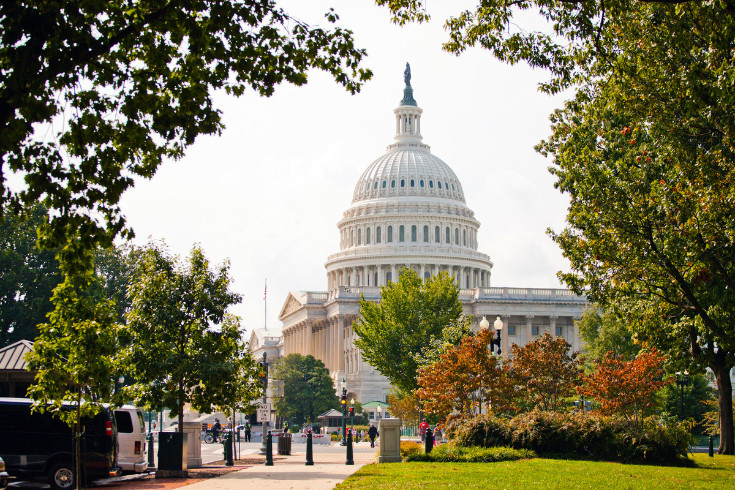
House lawmakers met for a marathon day of legislative business yesterday and into the early morning hours today, where they cleared several pending bills. Here’s an overview of what happened and what to watch for next week:
- Landmark Digital Asset Bills Pass Overwhelmingly. It’s a watershed moment for digital assets in Washington after House lawmakers overwhelmingly passed the Guiding and Establishing National Innovation for U.S. Stablecoins (GENIUS) Act and the Digital Asset Market Clarity (CLARITY) Act with strong bipartisan support. The stablecoin-focused GENIUS Act now heads to President Donald Trump’s desk for signature, while House Financial Services Committee (HFSC) Chair French Hill’s (R-AR) bipartisan digital asset market structure legislation will head to the Senate for further consideration. Chair Hill is expected to work with the White House to jam the Senate on passing the CLARITY Act without changes so that it can be signed into law expeditiously. However, it remains to be seen if the authors of bipartisan digital asset legislation in the Senate — including Sens. Bill Hagerty (R-TN), Kirsten Gillibrand (D-NY), and Cynthia Lummis (R-WY) — will go along with this plan. The group has been planning to put out a revised version of their market structure legislation at some point this month.
- Context & Next Steps. Earlier this week, House leadership had to break a legislative logjam spurred by Freedom Caucus opposition to the creation of a Central Bank Digital Currency (CBDC). Specifically, 13 GOP lawmakers held up proceedings throughout the week with concerns that both GENIUS and CLARITY would offer some sort of backdoor to the formation of a CBDC. Freedom Caucus conservatives ultimately secured an agreement in principle with House leadership to add anti-CBDC language to the fiscal year (FY) 2026 National Defense Authorization Act (NDAA). While this may be needed to ensure the NDAA’s passage in the House, any future CBDC language is unlikely to survive in the Senate, especially as leadership looks to bat down the possibility of other banking-related amendments getting tacked onto the annual defense policy bill — including the Marshall/Durbin Credit Card Competition Act.
- House Approves $9B Rescissions Package. House leadership used a procedural maneuver to “deem” the White House’s $9 billion rescissions package as passed, officially sending the measure to President Trump’s desk for signature at some point later today. The forthcoming cuts are likely to cause serious issues for the bipartisan appropriations process this fall, as Democrats have warned they will not support a deal to keep the government funded past Sept. 30 once the funding is clawed back. Adding further fuel to the fire is the fact that the White House also plans to issue additional rescissions requests in the coming weeks as the Office of Management and Budget (OMB) looks to codify cuts targeted by the so-called “Department of Government Efficiency” or “DOGE.” Additionally, House lawmakers passed the FY 2026 spending bill for Defense during yesterday’s session.
- Senate Eyes ‘Test Vote’ on Four-Bill Spending Package. Senate Majority Leader John Thune (R-SD) is eyeing votes on as many as four FY 2026 spending bills next week the chamber looks to move the spending bills for Agriculture-FDA, Commerce-Justice-Science (CJS), Military Construction-VA, and Legislative Branch before leaving for the August state work period. Next week’s procedural vote on the House-passed MilCon-VA bill — the legislative vehicle that will carry whichever bills get added to the underlying base text — will serve as a test to determine whether this first “minibus” spending package can meet the 60 votes needed to clear the Senate. While these four bills passed the committee with bipartisan support, lingering disagreements over the 12 topline spending figures, as well as the White House’s funding clawbacks, could stand as barriers to final passage on the floor. To that end, a continuing resolution (CR) will almost certainly be needed to keep the government funded past Sept. 30, but it remains to be seen if Congress will be able to get it done on a bipartisan basis.
- House Set to Close Out Summer Work Session. Barring any last-minute changes to the schedule from leadership, the House will meet for its last week of legislative business before the August district work period. Of note, leadership has filed nearly two dozen bills that “may” be considered under suspension of the rules next week. This includes a slate of bipartisan bills from HFSC that would: (1) require the Comptroller to study the costs associated with small- and medium-sized companies to undertake initial public offerings (IPO) H.R. 3395 (2) amend the Federal securities laws to specify the periods for which financial statements are required to be provided by an emerging growth company H.R. 3343 and (3) establish an Independent Financial Technology Working Group to Combat Terrorism and Illicit Financing H.R. 2384 It’s also possible that the House takes up a Senate-passed bill S. 423 that would direct the Department of Veterans Affairs to keep Congress advised about any budget shortfalls and create a new Veterans Experience Office to “determine veteran and beneficiary satisfaction.”
Final Senate Vote on Reconciliation Package Expected Today

The Senate is still in the process of its “vote-a-rama” amendment debate on the One Big Beautiful Bill Act as Republicans look to send the revised reconciliation package to the House later this morning. The GOP batted down scores of amendments and procedural motions offered by Democrats throughout yesterday and overnight, but floor action was noticeably slower at times as Senate Republicans continued to hash out last minute details, particularly on the health care and clean energy tax credit pieces. Notably, the Senate overwhelmingly adopted [99-1] an overnight amendment from Sen. Marsha Blackburn (R-TN) that removed a provision that sought to condition broadband infrastructure funding to a 10-year moratorium on enforcing state and local artificial intelligence (AI) laws.
- Where things stand. The final vote is expected to be close given the likely No votes from Sens. Thom Tillis (R-NC) and Rand Paul (R-KY). Sens. Lisa Murkowski (R-AK), Susan Collins (R-ME), and Ron Johnson (R-WI) have also expressed concerns throughout the process and should be watched closely as the final vote comes to a conclusion. Assuming the bill can pass the Senate today, House leadership will have their work cut out for them as they look to balance concerns from conservatives on the Freedom Caucus about the budgetary impact of the revised legislation, as well as lawmakers weary about deep cuts to public benefit programs like Medicaid and SNAP. To that end, it’s possible that consideration of the reconciliation package slips past the White House’s self-imposed July 4 deadline. Of note, President Trump expressed openness to moving back the deadline in comments to reporters this morning, admitting that he “think[s] it’s very hard to do July 4” at this time.
Shea McCarthy in STAT News: What Reconciliation Means for Medicare Physician Pay

TRP Partner Shea McCarthy was recently quoted in a STAT News article covering the key health care provisions contained within President Donald Trump’s “one big, beautiful bill.” Notably, the Energy and Commerce title includes a provision tying Medicare physician payment to inflation beginning in 2026 — a major win for physician advocates. “This is significant to the physician community,” McCarthy said. “They achieved a policy that was elusive but also was a big priority.” McCarthy also pointed out that this policy lays important groundwork for future advocacy efforts on Medicare physician pay now that the debate has shifted from whether pay will be tied to inflation, to how much it should be reflected in future updates.
The article in its entirety can be read below:
House GOP unveils plans to reshape Medicaid
The bill includes Medicaid work requirements and a crackdown on some ways that states boost funding
May 12, 2025
WASHINGTON — House Republicans are proposing to add work requirements for some Medicaid recipients and to reduce federal Medicaid funding for states that cover undocumented immigrants.
The policies were included in plans for reducing Medicaid spending released late Sunday by the Energy and Commerce Committee. The committee is holding a markup Tuesday of its share of the budget reconciliation package that Republicans are using to pass President Trump’s tax cuts and other legislative priorities. It’s aiming to reduce government spending by $880 billion over a decade to help pay for those tax cuts.
The nonpartisan Congressional Budget Office said Monday that the committee’s bill exceeds the $880 billion target, but hasn’t yet provided detailed estimates on specific provisions. The bill includes measures beyond health care, such as auctioning off wireless spectrum and reversing some Biden-era energy policies.
The CBO released preliminary estimates Sunday that the Republican plan could save more than $700 billion through 2034 from its health care provisions, but that at least 8.6 million people would go without health coverage as a result.
Medicaid is jointly funded by states and the federal government. Overall, Republicans said they would not reduce the amount that the federal government provides to states. But for states that provide coverage to undocumented immigrants, the bill would reduce the amount the federal government pays to cover people who gained coverage under the Affordable Care Act’s Medicaid expansion from 90% to 80%.
Undocumented immigrants are generally not eligible for Medicaid, but some states pay to provide coverage themselves. A committee staffer said the bill would cut funding to 12 states and Washington, D.C., if they continue to provide health insurance to those residents.
The Republican plan also includes work requirements for Medicaid eligibility. While a handful of states have implemented work requirements, this would be the first time that the federal government imposed a blanket work requirement in the health coverage program.
The policy would require that working-age adults without children and who are not disabled document that they work 80 hours a month to maintain coverage. They could also perform community service or enroll in educational programs.
“When so many Americans who are truly in need rely on Medicaid for life-saving services, Washington can’t afford to undermine the program further by subsidizing capable adults who choose not to work,” Rep. Brett Guthrie (R-Ky.), the chair of the committee, wrote in a Wall Street Journal op-ed Sunday.
He said that while “Democrats will use this as an opportunity to engage in fear-mongering and misrepresent our bill as an attack on Medicaid,” the bill “preserves and strengthens Medicaid for children, mothers, people with disabilities and the elderly — for whom the program was designed.”
Democrats, hospitals, and health advocates have been warning about the impact of Medicaid cuts on patients and providers.
“This is not trimming fat from around the edges, it’s cutting to the bone,” Rep. Frank Pallone, Jr. (D-N.J.), the top Democrat on the committee, said in a statement Sunday. “The overwhelming majority of the savings in this bill will come from taking health care away from millions of Americans. Nowhere in the bill are they cutting ‘waste, fraud, and abuse’ — they’re cutting people’s health care and using that money to give tax breaks to billionaires.”
Under the Republican proposal, states would have to check Medicaid enrollees’ eligibility twice a year, up from the current annual determinations.
The bill would also limit states’ use of common tactics, such as provider taxes, to increase funding for their Medicaid programs, by banning new or increased taxes. And it would remove a Biden administration policy around staffing requirements for long-term care facilities.
It’s not yet clear whether House conservatives will back the bill. The bill could be amended during Tuesday’s markup. Then it will proceed to the House floor, if the committee passes it. If it passes the House, the bill would still need to win approval in the Senate, too, where Republicans hold a 53-47 majority.
On Monday, Sen. Josh Hawley (R-Mo.) criticized the idea of cutting Medicaid in an essay for The New York Times. The article didn’t speak to the House bill specifically, but he warned against significant cuts to Medicaid.
“Republicans need to open their eyes: Our voters support social insurance programs,” Hawley wrote.
The bill also includes some changes to Medicare. For the first time, Medicare pay rates to doctors would increase based on inflation. Currently, doctors do not receive pay increases tied to inflation. The bill would increase pay by 75% of the rate of inflation in 2026, and pay rates would increase by 10% of inflation in subsequent years.
Doctors would like pay rates to keep up with inflation. However, Shea McCarthy, a partner at Thorn Run Partners who lobbies for specialist physicians, called the measure “the camel’s nose under the tent” because it gives doctors an opening to lobby for bigger inflationary increases each year.
“This is significant to the physician community,” McCarthy said. “They achieved a policy that was elusive but also was a big priority.”
The bill includes a list of reforms to drug middlemen. It would limit how pharmacy benefit managers can receive money from drugmakers and impose transparency requirements.
Thorn Run Partners Ranks Among Nation’s Top 10 Lobbying Firms

Thorn Run Partners (TRP) is proud to be recognized as the nation’s eighth largest lobbying firm according to POLITICO Influence — the leading government affairs beat in Washington, D.C. Since its founding in 2010, TRP has consistently ranked among Washington’s fastest-growing lobbying firms according to analyses from POLITICO, The Hill, Bloomberg Government, and others.
“We are tremendously grateful to our clients for their continued confidence and trust, as this recognition would not be possible without these incredible partnerships,” said TRP co-founders Chris Lamond and Andy Rosenberg. “We look forward to deepening these relationships that fuel our success, and remain excited for what’s ahead in 2025 and beyond.”
Interested in learning more about TRP’s practice areas, products, or services? Let’s connect and discuss how we can help.
House Committees Resume Reconciliation Markups

Key authorizing committees are meeting today to resume markups of their respective portions of the GOP reconciliation bill. After the Armed Services, Education & Workforce, and Homeland Security Committees approved their pieces of reconciliation yesterday, the Financial Services, Transportation and Infrastructure (T&I), Judiciary, and Oversight Committees are on tap for today. Of note, T&I Republicans are poised to a make series of last-minute changes to their bill before today’s markup, including: (1) removing a $20 passenger vehicle fee; (2) boosting the annual electric vehicle fee up to $250 from the original $200; (3) paring back funding for the Air Traffic Control (ATC) system to $12.5 billion, down from the original $15 billion; and (4) reducing the topline number for Coast Guard funding from $23 billion to $21.2 billion.
- Situational awareness. While Republicans are making significant progress toward enacting “one big, beautiful bill” containing President Trump’s legislative priorities, there are still several key debates ongoing with respect to the tax package, cuts to public benefit programs like Medicaid and SNAP, rolling back Inflation Reduction Act (IRA) green energy tax credits, state and local tax (SALT) deduction limits, and possibly more. Of note, leadership is expected to hold meetings today with rank-and-file lawmakers on Medicaid and SALT, respectively. Discussions are expected to intensify ahead of the Energy and Commerce (E&C) and Ways and Means markups, which are being targeted for next week. However, the timing for these markups could slip as these discussions continue. Meanwhile, additional clarity as to when Congress needs to address the debt ceiling is expected this week — a date that will act as “kind of a hard deadline” for getting the reconciliation bill on the president’s desk, according to Senate Majority Leader John Thune (R-SD).
Clarity on Debt Ceiling Expected Next Week

Congress is expected to receive additional clarity from the Treasury Department as to when the federal government could run out of borrowing power — a key factor that could accelerate consideration of the GOP reconciliation bill. Specifically, Treasury Secretary Scott Bessent is reportedly slated to provide Congress with an update as to when the “X date” will fall. According to a projection from the Congressional Budget Office (CBO) earlier this month, the federal government could run out of “extraordinary measures” to prevent a default by August or September, but this could get pushed earlier into the late spring or summer if tax revenue comes in below expectations. To the extent that Treasury’s estimate aligns closer to June or July, that will be a catalyst for congressional Republicans to mobilize on reconciliation to raise the debt ceiling as soon as possible. On the other hand, an August or September X date could also provide some GOP lawmakers with a justification to hold off while lingering debates over the total cost of the package, cuts to public benefit programs like Medicaid and SNAP, as well as key tax policy decisions are resolved.
‘Standout Firm’: Bloomberg Ranks TRP Among Nation’s Fastest-Growing Lobbying Firms

Results like this don’t happen overnight. According to a new analysis of disclosure filings from Bloomberg Government, Thorn Run Partners (TRP) grew its book of business by an impressive 467% over the past decade, placing us among the top-performing firms in Washington from 2014-2024. We are proud to have earned Bloomberg’s selective “standout firm” designation — reserved for top-revenue firms with high client retention rates — as it illustrates TRP’s capacity and commitment to servicing our clients.
“Also experiencing a dramatic jump from 2014 to 2024 was Thorn Run Partners, with a 467% gain in revenue reported on legislative disclosure forms — to $29.8 million, up from $5.25 million,” according to the report. “They’re among nine firms that more than doubled reported lobbying revenue since BGOV started analyzing the annual data.”
“As we celebrate this milestone, we remain deeply grateful to the clients, colleagues, and partners who have made our growth possible. said TRP co-founders Chris Lamond and Andy Rosenberg. “We’re proud of how far we’ve come — and energized for what’s ahead.”
Founded in 2010, TRP was built on the foundation of bipartisan expertise, client service, and strategic policy insight. That foundation continues to guide our growth as we help our clients navigate this constantly-evolving policy landscape.
Interested in learning more about TRP’s practice areas, products, or services? Let’s connect and discuss how we can help.
Congress Breaks After GOP Adopts Budget Resolution

Congress wrapped up legislative business last week after Republicans successfully unlocked the reconciliation process to pass “one big, beautiful bill” containing President Donald Trump’s legislative priorities on tax, border, energy, and more. Pursuant to the budget resolution, committees of instruction have until Friday, May 9 to produce their respective reconciliation bills, and Republicans are trying to move as quickly as possible through the upcoming May work period with the goal of passing the reconciliation bill before Memorial Day.
- When lawmakers return to Washington at the end of the month, Speaker Mike Johnson (R-LA) said that committees will begin holding markups on their respective instructions that will be combined into a single reconciliation bill. According to news reports from over the weekend, the first markups in the House Judiciary, Homeland Security, and Armed Services Committees are being eyed for the week of April 28. Meanwhile, timing for markups in the Energy and Commerce (E&C) and Ways and Means Committees are not clear as of now given some of the ongoing discussions on tax policy and spending cuts. However, action on reconciliation could speed up significantly depending on when the Treasury Department’s “X date” — the date in which the federal government is projected to hit its borrowing limit — falls. While the Congressional Budget Office (CBO) recently suggested that the X date could be in August or September, late May or June remains possible if tax revenue falls below expectations, according to CBO’s forecast.
- What to watch. Congress has until December 31, 2025 to extend the Tax Cuts and Jobs Act (TCJA), and Republicans are aiming to do so well ahead of the sunset deadline. We’ll be looking to see where the chips fall on key debates around TCJA permanence, the state and local tax (SALT) deduction, Inflation Reduction Act (IRA) clean energy tax credits, as well as numerous campaign promises from the President like no tax on Social Security benefits and tipped wages. Republicans also need to hash out key disagreements over the size and scope of cuts to public benefit programs like Medicaid and SNAP to ensure that the reconciliation package can pass with the requisite number of GOP votes in both chambers.